
A mismatched bend radius or an unverified mill certificate can delay a heat exchanger project by weeks, even after fabrication is already underway. Procurement teams sourcing Stainless Steel U Tubing for boilers, condensers, and heat exchangers carry this risk on every order they place. The supplier selected at the quotation stage decides whether the tubes fit, seal, and perform once installed. Ten factors separate a dependable order from one that comes back for rework.
1. Material Grade and Chemical Composition
Grade selection drives corrosion resistance and service life. 304, 304L, 316, and 316L stainless steel remain the common choices, and each carries a different mix of chromium, nickel, and molybdenum. Molybdenum in 316-grade tubes resists chloride-induced pitting better than 304, which matters for marine and coastal plant environments. Check that the supplier tests every heat for chemical composition and issues a mill test certificate against ASTM A213 or A249.
2. Seamless vs Welded Construction
A Stainless Steel Seamless U Tube handles higher pressure differentials because it carries no weld seam to inspect or fail. Welded tubes suit lower-pressure applications and cost less per foot. That gap widens in larger diameters, where few mills run seamless production at all. Match the construction type to the actual operating pressure, not to habit or assumption.
3. Bend Radius and Tolerance Control
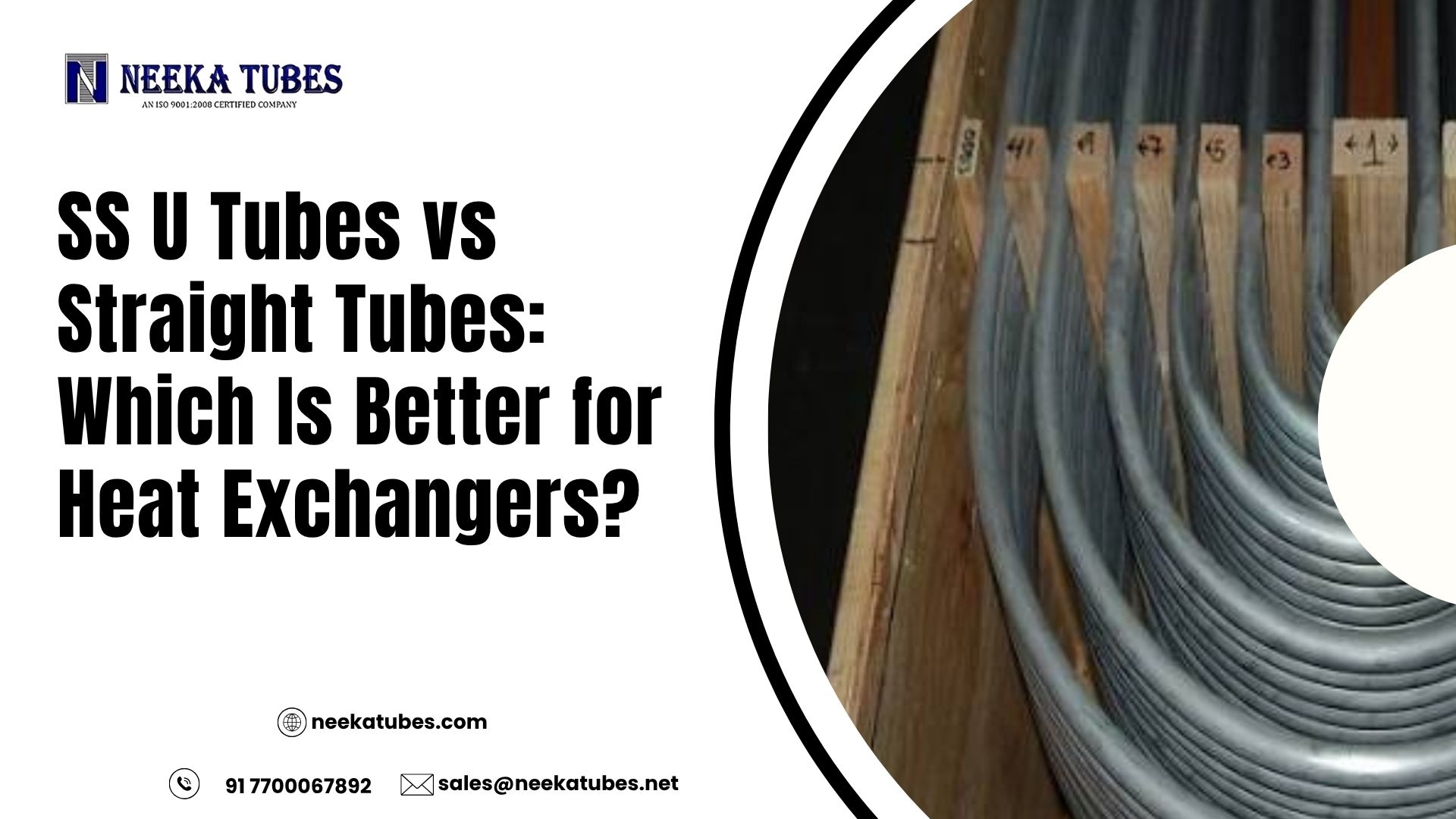
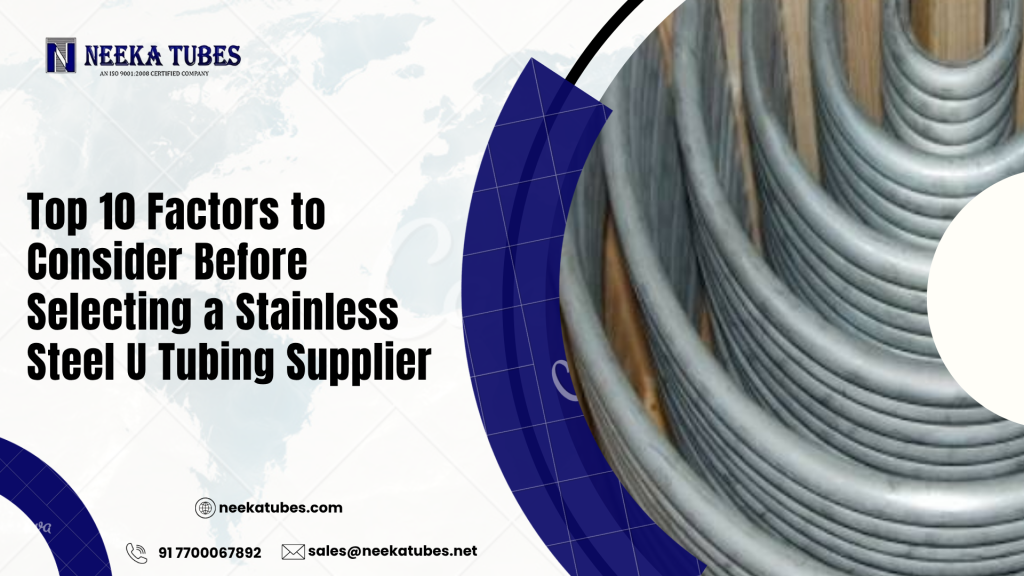
A Stainless Steel U Bend Tube must hold its outer diameter and wall thickness through the bend, not just along the straight legs. Ovality at the bend reduces flow area and raises pressure drop. Tight-radius bends, particularly at 1.5D or smaller, put the greatest strain on the tube wall and need closer process control. Request tolerance data on ovality and wall thinning specific to the bend radius you have ordered.
4. Wall Thickness Consistency
Wall thickness that thins unevenly during bending creates weak points under thermal cycling. Ask for ultrasonic wall thickness readings taken at multiple points along the bend, not only at the straight sections. Consistent readings across a full production batch point to controlled bending rather than one-off sampling.
5. Surface Finish and Cleanliness
Interior surface roughness affects heat transfer efficiency and fouling rates in condenser and boiler service. For pharmaceutical or food-grade use, the supplier should offer bright annealed or electropolished finishes with documented Ra values. Passivation after bending restores the chromium oxide layer that the forming process disturbs.
6. Testing and Quality Certification
Make sure the supplier runs hydrostatic testing, eddy current testing, and flaring tests on every batch, not on a sampling basis alone. ISO 9001 certification signals a documented quality system, but batch-level test reports matter more for any single order. Third-party agencies such as SGS or Bureau Veritas can verify results independently before shipment.
7. Standards Compliance
Cross-check that the U Shaped Stainless Steel Tube meets the standard specified on the project drawing, whether ASTM, ASME, DIN, or EN. A tube produced to the wrong standard can pass a visual check and still fail a code inspection later. That forces a costly re-order mid-project.
8. Production Capacity and Lead Time
Find out the supplier’s current lead time on the exact diameter, wall thickness, and bend radius required, not a generic factory lead time. Capacity constraints on speciality bends stretch delivery well past the quoted standard for tight-radius or thin-wall orders. Establish whether the required size sits in regular production or needs a dedicated run.
9. Traceability and Documentation
Every tube should trace back to its original heat number, complete with material test certificates, NDT reports, and dimensional inspection sheets. This documentation matters most during code inspections and warranty claims. A missing certificate at that stage can hold up commissioning by days.
10. Export Experience and Logistics Support
Suppliers who handle export packing, customs documentation, and international freight reduce the coordination burden on procurement teams working across borders. Check how the supplier packages tubes to prevent bend deformation during transit, and clarify who is responsible for damage discovered at the destination port.
Conclusion
Neeka Tubes has supplied stainless steel raw materials to industries worldwide for a decade, working directly with procurement engineers, EPC contractors, and heat exchanger manufacturers on order-specific requirements. Request a quote with your exact grade, bend radius, and standard specification, and get a lead time and test certificate commitment upfront.